TN DEATH PENALTY BLOG
We are traveling through Tennessee's heartland and highways, meeting folks and starting conversations about our death penalty.
Previous Posts
- Check out TADP's New Website
- More Evangelical Pastors Speaking Out on the Death...
- Moving Story about Sisters' Reponse to Murder
- Amnesty International Releases Global Death Penalt...
- Bob Clement Reflects on His Father, Governor Frank...
- Fox News Reports Crippling Costs of the Death Penalty
- U.S. Supreme Court Stops Texas Execution of Hank S...
- Justice Day on the Hill 2010
- Fast for Life and Raise Money for TADP
- Tennessee Death Row Inmate, Timothy McKinney, Gets...
Archives
- October 2005
- November 2005
- December 2005
- January 2006
- February 2006
- March 2006
- April 2006
- May 2006
- June 2006
- July 2006
- August 2006
- September 2006
- October 2006
- November 2006
- December 2006
- January 2007
- February 2007
- March 2007
- April 2007
- May 2007
- June 2007
- July 2007
- August 2007
- September 2007
- October 2007
- November 2007
- December 2007
- January 2008
- February 2008
- March 2008
- April 2008
- May 2008
- June 2008
- July 2008
- August 2008
- September 2008
- October 2008
- November 2008
- December 2008
- January 2009
- February 2009
- March 2009
- April 2009
- May 2009
- June 2009
- July 2009
- August 2009
- September 2009
- October 2009
- November 2009
- December 2009
- January 2010
- February 2010
- March 2010
- April 2010
Links
- Abolish the Death Penalty Blog
- Amnesty International Death Penalty Blog
- Asia Death Penalty Blog
- For Victims, Against the Death Penalty
- The Real Cost of Prisons Blog
- Uncommon Sense on the Death Penalty
- National Coalition to Abolish the Death Penalty
- Death Penalty Information Center
- Citizens United Against the Death Penalty
- Murder Victims Families for Human Rights
- Google News: TN death penalty
Contributors


Friday, July 28, 2006
Rain or Shine
 In a few hours, we will begin our community healing service to remember the execution of Sedley Alley, one month ago. In doing so, we recognize that homicide tears apart relationships. From the one single act, pain spreads outwards, like ripples on a pond. Those closest to the victim, both Suzanne Marie Collins and Sedley Alley, are the most directly effected, but the ripple touches us all. Because when the state kills, each and every one of us is a party to the action.
So, even as it threatens to rain, we will be gathering in community with one another, to share and to understand our loss. I have decided that it will not rain, but if someone isn't listening to me, we do have a tent and we will go forward anyway.
I hope to see many of you there.


Thursday, July 27, 2006
How Are We Doing?
 As organizers, as activists for social justice, as people, we are all busy. Our schedules are full of meetings, talks, information gathering, grant writing, blogging, press releases, conducting trainings, locating outreach targets, and just doing the administrative tasks that keep an organization afloat. So sometimes we forget to examine how we do things within the organization or how we are functioning. We're so busy trying to get everything done that we focus almost exclusively on the external. How many new members do we need to recruit? What legislative districts do we need to target? What message do we need to put out to the media?
So today, it was nice to take a step away from the external. Randy Tatel (our E.D.), Amy Staples (TCASK Board Chair), and I attended an all day workshop, "Making Your Board Effective." Now we got a lot of interesting perspective, new tools, and peer feedback, but for me, the most important part of the day was simply the opportunity to set aside time to think, not about how TCASK was affecting the Tennessee community, but about how TCASK internal mechanisms are functioning. Truly focusing only on the boards functioning and the relationship between board and staff offered a chance to assess what we need to improve upon internally.
Every organization recognizes the need for a functional organizational culture. But I think that it is often pushed to the back burner, to the bottom of our priority list. We have executions scheduled
 or an execution coming up. We have talks to give and new partners to cultivate. So we always think we can do the internal development later. But really, we need to respect how essential developing an effective board, or active chapters, or a productive and healthy staff environment is, because it's those things that make the external work that we do so effective.
For my part, I think we need to do more of this. One great way is annual retreats for the staff and for the board. Now currently our staff is only two, so this may not be necessary, but as we add additional staff we should think about an annual staff retreat focused on the internal functioning of the organization. And a board retreat is something that we've talked about, but has never made it very high up the priority list. Well, I'm not on the board, but my advice is, move it up, and use that time, not to make decisions about TCASK's future, but to talk about how well the board is working, and how it can function even more efficiently to lead us to our goal.
Taking the time to look inwards will improve our work outwards.
Wednesday, July 26, 2006
Breaking News: Yates Found to be Insane
 Just minutes ago a Texas jury found Andrea Pia Yates to be not guilty by reason of insanity. Yates, who drowned her five children to try to save them from hell when she, in a state of serious psychosis, believed that Satan was inside of her, had previously been sentenced to death. Instead Yates will now be committed to a mental hospital where she can receive the treatment that she so clearly needs. You can read more about Yates' case in Saturday's post below.
Sadly, even when there was so much clear evidence of mental illness in the Yates case, the state of Texas still argued that she did not meet their standard for being legally insane. This standard is similar to that employed by Tennessee, i.e. that a person know that they are going to be executed and know why. Fortunately, in this case the jury was able to see the truth despite the state's obfuscation. I only wish that the same could be said for the hundreds of mentally ill inmates around the country and the dozens of those suffering from mental illness and sentenced to death right here in Tennessee. Maybe we can all take some hope from the yates decision that our society may be moving toward a more just and understanding way of treating the mentally ill.
arbitrary... again: the geo-politics of lethal injection...
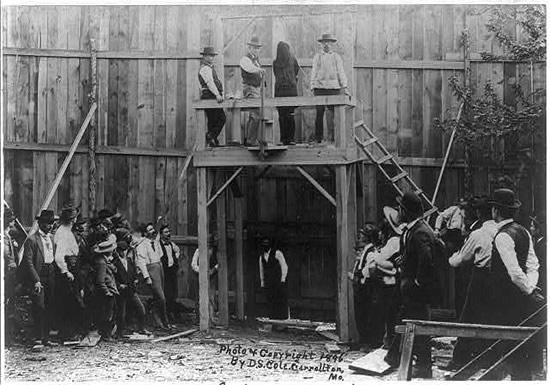 ans have been trying to make it less gruesome, more sanitary, a public relations no brainer...
and the "geniuses" who thought up lethal injection thought they'd hit one out of the park (no you silly person, the oklahoma legislators who enacted the first law not the nazi doctors who invented it as a method of killing the "unwanted" during the reign of the terror under the third reich)...
seems they were wrong...
on tuesday a federal judge found that missouri's revised lethal injection procedure was not adequate to ensure that condemned inmates did not suffer unnecessary pain...the state had modified its protocol in response to a ruling last month by u.s. district judge fernando j. gaitan jr., who barred executions until missouri made significant changes to its procedure, which is similar to those used by about three dozen other states...
missouri tried...seems state officials contacted 298 anesthesiologists in missouri and southern illinois, but none was willing to participate in executions...
so the ban on executions in missouri stands...
as does the one in california...
but wait, tennessee has the same protocol - the same set of drugs ... but we still get to kill people???
maybe it's just me but that seems arbitrary II...
peace out - <3
From Chattanooga
Stories show state's spending misplaced
It is appropriate that the paper has the story of Tennessee's first executions in several years in the same edition with the story of the dismal status of Tennessee's children as revealed in the Casey Foundation report.
Both executions and the lack of support for children appear to stem from a set of misplaced priorities in this state.
How can Tennessee spend hundreds of thousands of dollars attempting to kill two men (one of whom the state has itself determined to be mentally ill and the other for whom the state refuses DNA testing) while there are many better ways to spend the limited dollars available in this state?
Spending state funds for victim restitution, crime prevention for at-risk children and other programs designed to help children are much better ways to spend money than using it to orchestrate state killings.
The fact that Tennessee shows up at 46th out of 50 in the recent report shows that available funds are obviously not being spent for the betterment of children.
While the state cannot and should not be expected to fully support children financially, it should be expected to spend some available funds to help improve their lives.
Monday, July 24, 2006
Best Training Ever
So to get them to do what they know is right, we need to show them that they have support in their districts, and on
 e of the best ways to do that is to pass moratorium resolutions in local churches and small businesses. To that end, I spent Saturday in Memphis. The main event on my schedule was conducting a training in resolution gathering to our three person moratorium team, that we formed in Memphis last month.
Resolution trainings are a fun little event. Most of the training involves role playing and practice in going into small businesses and making a one to two minute pitch to the owner. TCASK provides pretty binders with visual aids that both keep the resolution gatherer on script and enhance the presentation for the business owner as well.
We had a good time (we were on an second story porch and it was a very nice day out)
 and the team did a really good time going through the pitch. But, the highlight came when we got a resolution before we had even finished the training. You see, "Food Not Bombs" came by to drop off a donation of bread. One of our team members ran down to the van and did her first pitch, and, thinking on her feet, pointed out that "Food Not Bombs" groups in several other Tennessee cities had already passed these resolutions (included in the binder is a list of all the Tennessee moratorium endorsers), and so they signed up. Man! I must be good!
So Memphis has a new moratorium resolution and a team heading out with 15 businesses already targeted in the next month. As we move toward a municipal resolution in Memphis and a legislative victory in the state assembly these resolutions will help make the difference.
Saturday, July 22, 2006
accident at the intersection of mental illness and the death penalty II
 andrea pia yates suffered from severe mental illness including psychotic and post-partum depression...
in 2001 she was found guilty by a jury in texas of killing her 5 children by drowning them in a bathtub...at her original trial in harris county the prosecutor sought to get the death penalty but the jury decided on life imprisonment...her conviction was later overturned after the chief witness for the prosecution was found to have lied on the witness stand, and she is now being retried...
although the death penalty is not an option for a retrial, the prosecutor is again seeking life imprisonment...the alternative verdict, "not guilty by reason of insanity", would probably result in andrea yates being sent to a secure hospital where she could be treated properly for her mental illness...a
 nd it is extremely difficult to successfully assert this defense...
the national mental health association (NMHA) believes that mental illness can influence an individual’s mental state at the time he or she commits a crime, can affect how “voluntary” and reliable an individual’s statements might be, can compromise a person’s competence to stand trial and to waive his or her rights, and may have an effect upon a person’s knowledge of the criminal justice system...the statement of the national alliance on mental illness (NAMI) on the andrea yates case was very compelling...
the andrea pia yates support coalition will be holding a candlelight vigil in houston on sunday july 23rd at 8:15pm central time in solidarity with andrea during her retrial...those who would like to send a message of solidarity to be read on sunday should email it to david atwood...
Thursday, July 20, 2006
They're Gettin' 'er Done
 It's finally coming together. Yesterday evening (later than an old fogey like me wanted to be awake) a group of students who form the TCASK Student Caucus working group were in the TCASK office. The students were preparing for Tennessee's first annual Student Conference Against the Death Penalty, which will be held on September 9th at MTSU.
The students did a session of peer review on the workshops that they themselves had developed for the conference (focused on campus organizing, planning events, the moratorium campaign, high school challenges, and campus events) and made final decisions on the conference structure. It is going to be a terrific event.
Luke Lea, one of the high school students involved in planning the conference, had this to say about student involvement:
An effort such as death penalty abolition, particularly in an entity with the general political views of Tennessee, requires an amount of conspicuous and deliberate opposition from each prominent faction. If any advancements are to be made, the expression of our opposition to the
 death penalty is imperative. Equally as essential to such a movement is the variety of sources from which these concerns are expressed. One such faction with untested and therefore untapped potential is the youth of Tennessee. The manifestation of this potential would provide our state with a radical core of abolitionists for years to come. The younger the individuals we succeed in mobilizing, the more successful mobilization we can accomplish, leading inevitably to favorable legislative results.
Sadly, a large part of the population assumes that the actions of the justice system are always just. Exposition of the facts will undoubtedly lead to new support for TCASK. Adding youth involvement to our cause can only strengthen this message. Displaying youthful enthusiasm for this cause conveys the fact that even students, a group infamous for their apathy, can unite in common opposition to the death penalty.
Wednesday, July 19, 2006
A Little Electronic Inspiration

The Journey of Hope is a group of murder victims' families, exonerees, and families of the executed that travel around a given state each year, spreading the good news of forgiveness and hope rather than revenge. Recently, the Journey has started its own blog. One of the main features of this blog is something called "Tuesday Focus" where a member of the journey is profiled and their story is briefly told. It's worth checking out, I know that I enjoy the quick tidbit of inspiration each week.
I'll be traveling with the journey in Virginia for about four days this October, and am really looking forward to the experience. From being able to work with some of Tennessee's own murder victims' families who oppose the death penalty, I know that these incredible stories of truly remarkable people can touch hearts and change minds in a way nothing else can.
Check out the Journey of Hope blog here.
Gettin' Training, Gettin' Money
At least that's what we came up with during one of the many exercises at the Center for Non-profit Management's Basic Grant Writing Seminar, which I was lucky enough to tak
 e part in yesterday. The exercise involved grouping organizations together to brainstorm collaborative projects for a (sadly) fictitious $250,000 grant. Now three groups, children, elders, and education, shook at fairly easily, but that left a group of five of us, representing the previously mentioned four agencies sitting around a table trying to find some common ground between us. After pitching our idea, though, we got an ovation from the workshop participants.
I admit, it was interesting to see what a number of organizations could come up with when asked to collaborate. But there was a lot more to the workshop. For me, an organizer and not a grant writer, it was a great introduction to the process of researching and writing grant proposals. I came back with two books and a lot of terrific ideas about the process. I would love to take their Advanced Grant Writing Workshop, but unfortunately it is only being offered once for the rest of the year - during the one week that I was planning on taking a vacation and getting home to New York.
Still, I had a terrific time and learned quite a bit. Continue to develop our skills, even as we work toward abolition, is important for us. It keeps us motivated and intellectually engaged with our work and additionally makes us better at what we do. Who knows, maybe next week I'll write TCASK a grant proposal that brings in some money!
Tuesday, July 18, 2006
promoting murder by numbers, inc...
 ith the nurse who so easily starts the ivs for the condemned inmates in georgia as they prepare to receive the poisons that will kill them - well it sends honest to g_d chills up and down me and my whole body shakes uncontrollably, even if only for a few, long seconds...
then interview was part of the now with david brancaccio show from last friday...
it left me considering the way in which death penalty advocates remake the frame and manipulate the facts to argue their deadly and pernicious case...and this led me to think about the dreaded scalia - yes, u.s. supreme court justice for "life" antonin scalia...
 the dreaded scalia in his concurring opinion upholding kansas's flawed death penalty he joined a growing chorus of death penalty proponents who claim that our criminal justice system is nearly perfect in adjudicating guilt and innocence!!!
scalia bases his assertions on the flawed statistical arguments of joshua marquis, a self-promoting, pro-death penalty mouthpiece for the district attorney lobby out of oregon...
seems marquis can't find a legitimate social scientist to review his ideas ... you can (and should) read the article by david feige in the boston globe by clicking here ...
feige uses the case of recent exonoree alan newton to demonstrate how unreliable the criminal justice system is...
my favorite section from the article??? fine i'll give it to you here... "Comparing exonerations to felony convictions is like arguing that the Ford Pinto was safe because compared to the total number of automobiles sold in the United States, not many of them blew up..."
but you had better check the whole article, k'?
peace out - <3
p.s. please say a prayer for my mother who is struggling mightily after major surgery yesterday...
Monday, July 17, 2006
Do No Harm
A statement from William G. Plested, the president of the AMA, follows:

"The American Medical Association is troubled by continuous refusal of many state courts and legislatures to acknowledge the ethical obligations of physicians, which strictly prohibit physician involvement in a legally authorized execution. The AMA's policy is clear and unambiguous - requiring physicians to participate in executions violates their oath to protect lives and erodes public confidence in the medical profession.
"A physician is a member of a profession dedicated to preserving life when there is hope of doing so. The use of a physician's clinical skill and judgment for purposes other than promoting an individual's health and welfare undermines a basic ethical foundation of medicine - first, do no harm.
"The guidelines in the AMA Code of Medical Ethics address physician participation in executions involving lethal injection. The ethical opinion explicitly prohibits selecting injection sites for executions by lethal injection, starting intravenous lines, prescribing, administering, or supervising the use of lethal drugs, monitoring vital signs, on site or remotely, and declaring death.
"As the voice of American medicine, the AMA urges all physicians to remain dedicated to our ethical obligations that prohibit involvement in capital punishment."
Personal Contacts

The state of Tennessee is big. Now it's no Texas, but there is no denying that there is a lot of space there. And an interesting bit of the Tennessee geography is how so many of the big cities are right on the ends of the state and there is a lot of space in between them without a very large population. However, those areas still have state representatives and often very powerful ones, such as House Speaker Jimmy Naifeh and Lieutenant Governor John Wilder, and we need to be able to demonstrate support within their districts to rural legislators as well. And that means that we have to get out there and start talking to folks in those areas.
One of the ways that we do that is doing the general systematic outreach to faith communities within those l
 legislative districts, but, especially as areas get more spread out, it's often harder to locate networks of people, so we need to work through some personal contacts. Let's say that I know someone in Bolivar, Tennessee. I give them a call and ask them about people they know - their minister, active people in the community, professor at a local college, head of a local NAACP Branch. Then I ask them if they will provide me contact information for three of these people (three just seems to be a good number) and (and this is an important and) if they will call the people first and tell them that I will be calling them. This way, I'm not some crazy New Yorker, currently living in Nashville, randomly calling or writing to people. Then, after I speak to each of these contacts, I may ask them to do the same. Ask a local minister to give me some other good prospective faith communities in the area and call the pastors as an introduction, etc. With this process, we can go from knowing one person in an area to doing presentations at a couple of churches, building our contact lists, holding vigils, and conducting write-a-thons.
So as we work to deepen our outreach this summer, I'll be calling the people that we know. If you live in an area where TCASK hasn't been too active yet, don't be surprised if your phone rings!
Sunday, July 16, 2006
still arbitrary - still capricious...
 july 2, 2006 marked the 30th anniversary of the u.s. supreme court's decision in gregg v. georgia, an historic ruling that upheld newly crafted death penalty statutes and signaled the beginning of the modern era of capital punishment...
the skinny on gregg v. ga is that it was supposed to remedy the concerns of the court over the arbitrary nature of capital punishment which led it to declare death penalty statutes unconstitutional in furman v. georgia 1972...
justice potter stewart is most often quoted for saying that capital punishment is cruel and unusual in the same way that getting struck by lightening is cruel and unusual but his more substantive statement is as follows...

"the penalty of death differs from all other forms of criminal punishment, not in degree but in kind...it is unique in its rejection of rehabilitation of the convict as a basic purpose of criminal justice...and it is unique, finally, in its absolute renunciation of all that is embodied in our concept of humanity..."
here in tennessee we were still reeling from only the second execution in 46 years and did not acknowledge this solemn and important anniversary - my bad...
click here to read a concise and thoughtful op-ed piece by professor michael meltsner, who worked as an attorney with the naacp legal defense fund in its efforts to challenge the death penalty in the 1960s and 70s...
Friday, July 14, 2006
Constitutional?
 It seems that an inmate in Virginia is choosing to die by the electric chair rather than by lethal injection, according to a number of news outlets (read the text of the standard story here). This would be the first execution by electrocution in two years. Many states have ended the use of the electric chair, but others like Virginia, and of course Tennessee, still have the option available.
Recently, doing a debate show with a death penalty supporter regarding the Supreme Court's decision to allow inmates to proceed with challenges to the constitutionality of lethal injection procedures, the death penalty supporter drew a stark line between humane methods, like lethal injection which they supported, and more brutal ones, like electrocution. For once, on a small point, at least, we were in agreement.
Consider just a few of the electrocutions that have gone horrendously wrong in the so-called modern era:
May 4, 1990. Florida. Jesse Joseph Tafero. Electrocution. During the execution, six-inch flames erupted from Tafero's head, and three jolts of power were required to stop his breathing. State officials claimed that the botched execution was caused by "inadvertent human error" -- the inappropriate substitution of a synthetic sponge for a natural sponge that had been used in previous executions. They attempted to support this theory by sticking a part of a synthetic sponge into a "common household toaster" and observing that it smoldered and caught fire.
Or again:
July 8, 1999. Florida. Allen Lee Davis. "Before he was pronounced dead ... the blood from his mouth had poured onto the collar of his white shirt, and the blood on his chest had spread to about the size of a dinner plate, even oozing through the buckle holes on the leather chest strap holding him to the chair."45 His execution was the first in Florida's new electric chair, built especially so it could accommodate a man Davis's size (approximately 350 pounds). Later, when another Florida death row inmate challenged the constitutionality of the electric chair, Florida Supreme Court Justice Leander Shaw commented that "the color photos of Davis depict a man who -- for all appearances -- was brutally tortured to death by the citizens of Florida."46 Justice Shaw also described the botched executions of Jesse Tafero and Pedro Medina (q.v.), calling the three executions "barbaric spectacles" and "acts more befitting a violent murderer than a civilized state."47 Justice Shaw included pictures of Davis's dead body in his opinion.

The death penalty is certainly cruel and it is certainly unjust. But using methods that can produce such heinous and horrific results should give pause even to the staunchest of death penalty supporters. And we still have the electric chair sitting waiting in Tennessee's death chamber.
*The above descriptions of the executions were taken from the Death Penalty Information Center.
Return to Abolitionton
When I arrived at TCASK, nearly a year ago, systematic outreach to faith communities in strategically targeted legislative districts became one of my first job responsibilities. And one of the first areas that I reached out to was Giles County, Tennessee.
What!? Giles County!? Pulaski!? Why would you go there?Well, Giles County is (or was) ably represented in the Tennessee State Legislature by Joe Fowlkes, in the House, and Doug Jackson in the Senate. Fowlkes, before his retirement this year, was the chair of the House Judiciary Committee, and Jackson was the Vice-Chair of the same committee in the Senate. Suffice to say, these were two votes that we were going to need.
So I made contact with a number of churches and toward the end of 2005 spend an entire weekend in Pulaski. And it was a very productive weekend, including talks at 3 faith communitie
 s, meetings with ministers at 2 more as well as the local United Methodist college and the local paper, and gathering 6 moratorium resolutions from local small businesses. Since that time, we've continued to work in Pulaski and, on May 16th, when the state was attempting to execute Sedley Alley, a prayer service was held in Pulaski with faith leaders from five different denominations presiding.
Now yesterday I was back to work, this time on the phone. A group has begun to form in Pulaski to work toward a municipal moratorium resolution from the Pulaski City Council. So Alex was hitting the phones, contacting key contacts in the local community to work toward the vital task of scheduling a meeting. So here is our step-by-step process for meeting scheduling that anyone can follow:
- Pick a week (or two) several weeks away when your schedule is fairly open.
- List the people you want to attend the meeting, and, this is the difficult part, make the list in the order of importance for the meeting. Now "importance" is a fairly relative term and can be based on sway within the community or energy and excitement about the issue. One tip, put ministers and public officials near the top of the list, because their schedules tend to be insanely busy.
- Make your calls in the order you've decided. Ask people what days in the chosen week would not work for them.
- From responses, and this may take a few tries (don't get discouraged by answering machines) narrow down your day and then call everyone back with date, place, and time.

So that's what I've been working on the past few days in Pulaski. It can be a little plodding (who doesn't love leaving 8 messages a day) but when we pass a city resolution in Pulaski, it will be worth it and people will sit up and take notice. And pretty soon, we'll rename Pulaski Abolitionton!
Thursday, July 13, 2006
A Balancing Act
Nonetheless, as the recent execution of Sedley Alley and near execution of Paul Dennis Reid demonstrate, it is necessary for TCASK and all abolitionists, to become more victim focused in our approach. And it is also the right thing to do.
It isn't hard to see that the death penalty can be very harmful to victims' families. A system that drags out the worst moment of a person's life, forcing them to re-live it again and again over the course of 10, 15, or 20 years is simply not a way to promote healing for victims' family members. In fact, it runs the very serious risk of re-traumatizing them. Some people will suggest that this calls for an expedited death penalty, but those people have to remember that, with 123 exonerations in the modern era of executions, the faster you make the process, the greater the risk of executing innocents.
 Still, we have a long way to go to make ourselves more truly victim centered, but this also leads us to an interesting balancing act. We don't believe that people on death row are monsters or unworthy of life, and we have to resist the societal depictions of them as such. At the same time, we do no good for victims if we minimize the crimes committed by those facing a death sentence. It is important for us to acknowledge the pain an loss associated with murders. But it is equally important for us to refuse to allow another life to be taken. This is not an easy line to walk.
I am continually inspired by those who have lost loved ones to murder and have found the strength to speak out against state killing. People like Hector Black (featured earlier
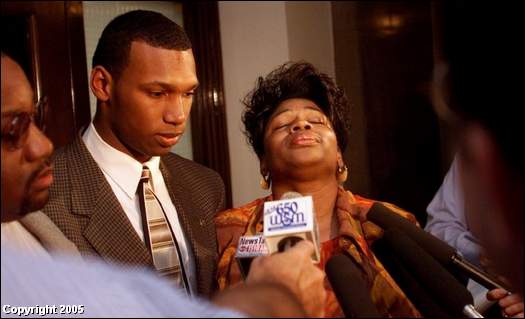 this week on the blog), Regina Hockett, and Charlie Strobel right here in Tennessee offer us a new model for dealing with loss. But every person grieves differently and heals at a different rate, seeking to find some peace after a loss that those of us who have not had a loved one murdered will never understand. When we talk about the death penalty and advocate for abolition, we can never afford to lose sight of this.
Wednesday, July 12, 2006
And a Time for Every Purpose Under Heaven
 But something horrendous did occur and our names are attached to that death certificate and the cause of death that reads "homicide". And that is not an easy thing to process, particularly when many of the people around you don't understand your pain, and feel that "justice was served".
So, even while we look ahead to these possible executions, and even as we lay our plans to organize all around the state to truly end the death penalty, and ensure that what happened to Sedley Alley never happens to anyone else ever again, we need time to grieve together, and be with one another. So on the one month anniversary of Sedley Alley's execution, Friday July 28th, we will gather together at the new TCASK office in Holy Name Catholic church to simply create space for us to be together, as a community, to begin to process this tragedy. We talk so much about the need for healing after a violent crime and it is important that we follow our own words when the state is the perpetrator of that violence.
Tuesday, July 11, 2006
Suicide
But in America we have another form of suicide which goes completely unreported - state-assisted suicide for death penalty "volunteers". In the modern era of executio
 ns, more than 10% of those executed have been so-called volunteers, those inmates who drop their appeals and seek to be executed. We had a near volunteer right here in Tennessee last month when Paul Reid attempted to drop his appeals but questions about his mental competency to do so led to a last minute stay of execution. Daryl Holton is scheduled to be executed in September as he attempts to drop his appeals.
Some people like to view this phenomenon as inmates accepting the justice of their sentence, but a very interesting article, John H. Blume, of Cornell Law School, compares volunteering to suicide in the general population and finds that most volunteers match the suicide model rather than the acceptance of justice model. For instance, over 70% of suicides in the general population are committed by white men. Whites represent around half of the death row population, but account for over 80% of all volunteers. Additionally an extremely large percentage of those who commit suicide suffer from substance abuse and mental illness, particularly schizophrenia, severe depression, and bi-polar disorder. These numbers are mirrored on death row; Paul Reid has been diagnosed with schizophrenia (among other things) and Daryl Holton suffers from major depression with psychosis and has a history of suicide attempts. In fact, 87% of death row volunteers through 2004 suffer from either mental illness, substance abuse, or both.
You can read Blume's entire article here, although I warn you, it is fairly long.
The conclusion to be drawn seems clear, volunteers are generally seeking a way to commit suicide, not accepting the justice of their sentence. If this is the case, then determining mental competency (and the threshold for mental incompetency must be adjusted to properly take into account our growing understanding of mental illness) but the motivation of the inmate must be taken into account, as participating in suicide is immoral and illegal. In his article, Blume suggests one possible two-pronged standard to determine whether an inmate should be allowed to drop their appeals. This is certainly a starting point for a terrific discussion that we all need to engage in during the coming months. Are volunteers accepting justice? Or are we seeing a last desperate cry for help from people who have experienced serious emotional trauma, abuse, and mental illness?
Monday, July 10, 2006
Wish List
 So we have now been here at Holy Name Catholic Church for about a month, and none of the swept off my feet luster has worn off yet. This is still the nicest space TCASK has been in in at least the last several years, and, with it's convenient location just across the river from down town and the capitol and only a few blocks from some good food and coffee at five points, we couldn't be at a better spot in the city.
And did I mention that this is a real office? You see, for the last year or so, TCASK has been housed in a house over in West Nashville. Now, as I think my first paragraph made clear, we love the move, but we have lost a few things in making the change, and we thought we'd take this opportunity to throw ourselves on the mercy of the blog reading public, see if anyone really is reading out there, and see if y'all can help us out. So here goes.
To begin w
 ith, I'm a New Yorker, which means that the day does not begin until I've had my toasted bagel (in my case with peanut butter and hot sauce, but we don't need to get into that). Of course, to have my bagel, we need a TOASTER! Who would have thought?
Second, especially around executions, keeping an eye on press coverage
 is a very important part of what we do, as is viewing videos from around the country to assess their utility as organizing tools, but of course, for this, we need a TV, preferably with a VCR until attached.
And houses are bigger than our office, which means that, for us, storage space is at a premium. We've made, if I do say so myself, pretty excellent use of our one closet and current bookshelves, but we need at least one more bookshelf to house all of our materials.
And lastly, our phones. Now there's no difference between our old office and our new in relation to th
 e phones, but the phones are two years older than they were when we moved into our last space. Consequently, our cordless phones are holdig their charge for shorter times. What we really need, for those long conversations, is a back up cord phone, which doesn't need a charge.
One phone change that has been made is that we now have two phone lines (one of which the fax also operates) so eventually we need a two-line phone system to really make us happy.
So, now that I'm done with my little wish list, if anyone has any of the above items and would like to make an in-kind donation to a charitable organization (that's us if that wasn't clear), give us a call at (615) 256-3906 and let us know. We'll be more than glad to take any of the above items off your hands.
And, I promise, bagels help me git er done!
A Monday Treat from Hector Black
Thoughts on the Death Penalty July 9, 2006 5AM
It seems to me the DP is an act of revenge. A life for a life. I know that when our daughter was murdered,
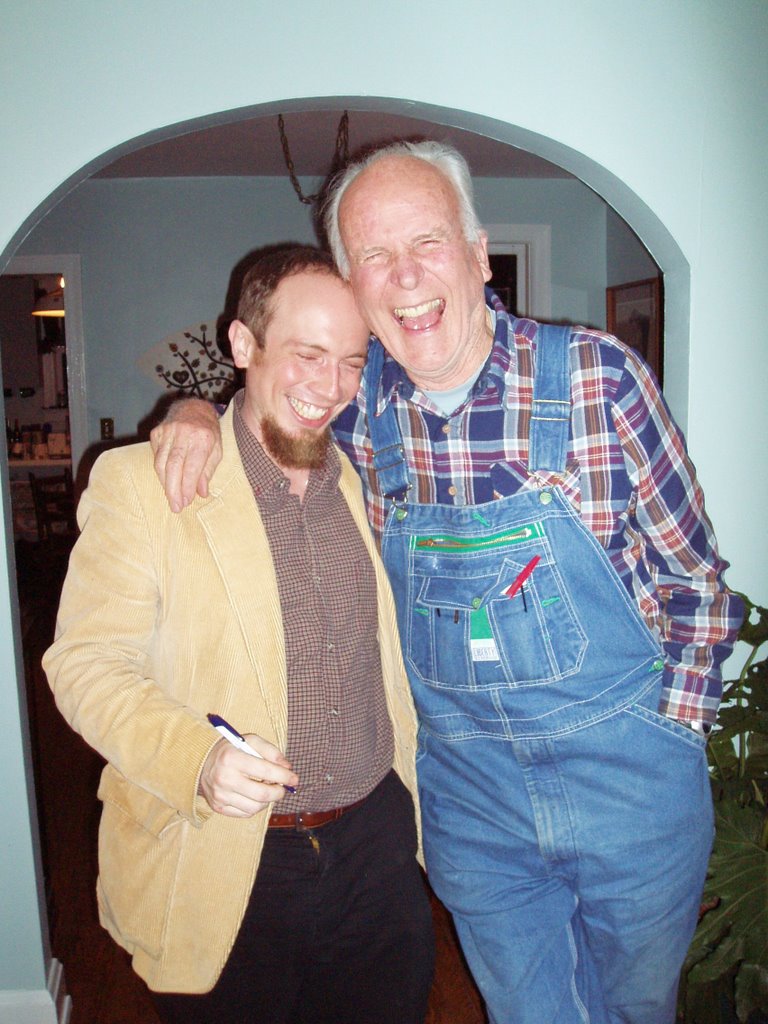 I wanted the man who did it to hurt the way I was hurting. I wanted him to suffer like our daughter did. I wanted to get even. Seems to be a natural impulse. But is there any way of getting even? I mean really even. How can anyone make up for the brutal death of your loved one? Isn’t bringing the loved one back is the only way to really get even - to get back to where you were before the horror? My wife and I came to realize that killing the man who killed our daughter would not honor her in any way. Doesn’t the death penalty just add one more death, one more group of relatives and friends hurting. Does the world need more pain? Seems to me there is more than enough to go around.
When I think about the death penalty I realize that it penalizes the poor. When did you last read about a rich person being executed? It’s certainly not that rich people don’t kill. They can hire the top lawyers (shoot, they can hire killers). They find a way through. Just the power of having a lot of money seems to affect the way we think about them. Guy off the streets? A nobody. But a Rockefeller….Money even changes the balance in the delivery of justice. Not one of the 102 people on death row in Tennessee could afford a lawyer.
The proportion of people or color executed for murder is way higher than of white people. Think that’s because they kill more often? Think again.
Does the DP slow the murder rate? Nope, just check out no death penalty Europe’s murder rate and ours. Unless you think Europeans are just less likely to kill. Or take Texas - one of the highest murder rates in the nation in the state the executes more people than any other.
Well, is it Christian? To that, I would ask if you can picture Jesus pulling the switch on an electric chair, or injecting poison into the person strapped to a gurney.
Is it justice, equal justice? Over a hundred people have been released from death row because DNA evidence proved their innocence. Makes one wonder how many innocents have been executed. The death penalty is not applied evenly throughout the US. A person is killed in Texas who would instead be sent to jail in Vermont. How fair is that?
And do you really enjoy the United States being in the company of Saudi Arabia, China, Iran? We are the only western democracy that still executes people. Ugh! Saudi Arabia! They behead people there don’t they? All that blood. We don’t want to think about it. We want our death to be bloodless. Murders are usually bloody. Maybe we would get better “closure” if we saw the murderer’s blood. Herod’s wife got even by having John the Baptist’s head served her on a platter. Pure hatred. Isn’t the death penalty also an act of hatred leaving the murderer with no possibility for remorse, for redemption?
Oh, and for you conservatives out there, life in prison is less expensive than execution. Check it out.
So, if it’s administered unfairly, if it’s unchristian, if it’s an act of revenge and doesn’t deter murder, and it’s more expensive, why in Sam Hill do we continue to use it?
Sunday, July 09, 2006
don't play games - just say you want revenge...
 murders are horribly sad and tragic events...
should i repeat that???
okay...murders are horribly sad and tragic events...
so, on this point we are all on on common ground - death penalty opponents, agnostics, and supporters alike ... each of us is appalled, offended, and heartbroken when we learn of the loss family, friend, and even stranger has suffered when someone's life is senselessly taken by violence at hand of another person...
so where do we depart this common ground??? the short answer is our response and in the case of those who support killing a killer to show that killing people is wrong the justification is that it is reserved for the "worst of the worst"...
if we look at 2 current murder cases here in tennessee we can consider the arbitrary nature of such a classification...
jennifer hyatte is accused of fatally shooting a prison guard to help her inmate husband escape in august 2005...both she and her husband george are charged with first-degree murder in the killing of state prison guard wayne "cotton" morgan...the district attorney general's office is seeking the death penalty for both...
genero espinosa dorantes and his girlfriend, martha patlan, were returned yesterday from mexico to nashville to face charges that they killed patlan's 4-year-old son, then fled to mexico after dumping his scalded and burned body in a nashville park...
dorantes and patlan will not face the death penalty - the mexican government does not extradite prisoners to the u.s. who are mexican nationals facing a possible death sentence.davidson county deputy district attorney tom thurman said that the government
 had to assure the mexican authorities there would be no death penalty in order to obtain an extradition...
two murders - both grievous... the first tragic - yes, but nothing heinous as far as these horrible outcomes go... the second - tragic, yes and truly /horrific...
possible outcome in the first case - two executions ... possible outcome in the second case - two sentences of life without the possibility of parole...
this is but one example of what is meant by the arbitrary and capricious nature of death sentencing...
this is why justice adolpho birch dissented in death sentences time and time again while upholding the convictions themselves ...
tennessee has no functional proportionality review and capital punishment is not reserved for the so-called "worst of the worst"...
it's obvious that we do not need to - and should not - seek killing killers as a response to homicides...we call again for the state to stop diverting resources from victim's compensation, crime prevention, and children's resources and do away with a sentence inextricably tied to a broken system...
so let's at least have an honest discussion about where our consensus falls apart and don't play games - if you're for the death penalty just say you want revenge...
peace out <3
Friday, July 07, 2006
Monsters
 That's the word that we hear most often from death penalty advocates. That's how we justify it to ourselves. The people on death row aren't people, they are monsters. Not like us.
People said that around Sedley Alley's execution, but last night I received one of the most moving reminders of how untrue this is. People, even those who have committed horrendous acts (and in Sedley Alley's case, his guilt remains in question), are still people, capable of loving and of being loved. Capable of beautiful sentiments. So last night, at the memorial service for Sedley Alley, I was struck again by the fact that this so called monster had people who loved him, and loved him dearly. The last page of the program included the final statement of Sedley Alley. It reads:
I cry not for myself but for those I leave behind. I am going to a much better place where I will find and know
 true peace. It is the ones I leave behind that I am concerned for. This world is rough and light is dim in it. Where I am going is full of light. The world is tough and there is a lack of compassion and love here. Where I am going there is an abundance of Love, Compassion and Forgiveness. This world has always felt foreign to me. Where I am going is our home, our true home.
I pray that my children will find peace and be able to move on with their lives. I pray that they will find peace in knowing that my pain is through and that I am going to a much better place.
The main thing I want to say to my children, family, and friends is this, Find peace and happiness, live a long life full of Love, forgiveness and hope. To my children, my family, my friends and to those that hate and despise me, to my last breath you all will remain in my prayers and thoughts.
I hold fast to one prayerful thought, that my children, the rest of my family and friends and those that hate me will now be able to find the peace of God that passeth all understanding.
All that has been killed here is my body. A body that was worn out and tired and ready to rest. All that has happened is that my spirit had been allowed to go home and to be with our Lord. To my last breath I pray for this world and forgive those I leave behind.
go on ahead and throw some seeds of your own...
 Into a dancer you have grown
From a seed somebody else has thrown
Go on ahead and throw some seeds of your own
And somewhere between the time you arrive
And the time you go
May lie the reason you were alive
But you'll never know...
-Jackson Browne, 1974-
ever wonder if the work to educate people about the failure's of the death penalty system is bearing fruit??? the answer is yes - consider this note i received a couple of days after last week's execution and my thanks to the writer for sharing it with me and permitting me to share it with you...
peace out - <3
"...my opinions about the death penalty have changed so much since meeting you. I was really never on one side or the other. But I feel completely against the death penalty now after talking to you ... and being able to see a different side to the situation.
I was watching the news last Tuesday night and my kids were with me. They asked me about what an execution was and how it happened. I explained it to them in very basic terms since they are 7 & 10. Wednesday morning ______ woke up and crawled into bed with me and said, "Mom, did they execute the man last night?", I said "yes" and he said he was thinking about it and was sad.
So, see how what you've shared with me has now affected a new generation. I just thought you should hear that story."
Thursday, July 06, 2006
The People and the Power of the Press

In the past two days, the Tennessean Letters to the Editor page has been graced with a few excellent letter and, yes of course, a few bad ones, but, ignoring those, let's celebrate the good pieces. Today, a letter from TCASK Board member Kathryn Lea appeared in response to a letter from a few days ago claiming that the Bible and therefore God support capital punishment. Lea's concise and articulate response can be read here (it's the fourth letter):
On the 4th of July, while most of us were out watching fireworks (East Nashville looked a little bit like a war zone from my roof), another terrific article in regards to Sedley Alley appeared, written by Bobby Braddock. Click here and scroll down to the last letter to read a great message.
Press coverage is vital to the work that we do. Here in the office, we send out press releases and media advisories, we establish and cultivate relationships with reporters and editors, and we plan media events, but sometimes coverage isn't forthcoming, or reporters put their own spin on a story. Letters to the Editor are a wonderful democratic solution. They show grass roots support for our issue and offer a great opportunity to get important messages out without worrying about the 15 second sound bite. With our state looking at three more serious execution dates this summer and fall, the more attention that we can call to our issue in the press, the better.

So even if there aren't any big events or sensational stories for reporters to cover, we can continue to build grassroots support and get media attention through letters and op-eds. By the way, you know who else reads the editorial page? Legislators! It's a great way to demonstrate to our elected officials that there constituents care about the serious flaws in the death penalty system.
So go ahead and write a letter to your local editor. Here are some quick and simple tips to make the letter more effective:
- Keep it short. Letters should be no more than 250 words.
- Since you're writing a short letter, pick one central point and stick to it.
- Proof read. Editors will select well written letters, so no typos.
- End with a nice sting, witness the great ending lines of both of today's highlighted letters.
- If you need some timely facts, ask us. The TCASK staff is here to help.
So go to it and demonstrate the power of the people with the power of the press!
Wednesday, July 05, 2006
In Memory
Memorial Service for Sedley Alley
Father, Friend, and Child of God
Thursday July 6, 2006
7:00 p.m.
Wightman Chapel
at the Scarritt-Bennett Center
Nashville, Tennessee
***************
contacts: Dixie Gamble 615-975-2955
Susan McBride 615-258-2672

Laws and Justice

However, as uplifting as this news was, a recent piece in the Tennessean is equally disheartening. It appears that Governor Phil Bredesen is focusing his questioning of judicial applicants on the death penalty, asking if they can carry out the state's current law. Given that Justice Adolpho Birch is being replaced, this is a very sad development indeed.
Justice Birch refused to sanction the state's death penalty because, with no proportionality review system in place, he believed that such a system was unfair. Justice Birch, to my knowledge, did not assert that the death penalty is inherently unconstitutional or immoral, but he, a highly trained and accomplished legal scholar, asserted that our current system fails to meet our standard of equal justice under the law. It seems that Phil Bredesen, who has referred to Justice Birch as a "trailblazer," does not care about this, and may, in fact, be attempting to avoid placing another Adolpho Birch on the bench.
This is a terrific loss to the people of Tennessee. About a third of the population does not support the death penalty, and to exclude this group from representation on the Supreme Cou
 rt, much as they are excluded from juries, is to turn our backs on the idea of representative government. Moreover, it seems that Governor Bredesen does not want to acknowledge what Justice Birch and thousands of others already know, that the Tennessee death penalty system is fundamentally flawed and requires, at the very least, major reform if it ever hopes to fulfill its function.
At a time when the state executes Sedley Alley without testing DNA evidence that could exonerate him, and sets dates of execution for Paul Reid, Daryl Holton, and Stephen Hugueley when serious questions about their mental competency exist, we need principled judges like Adolpho Birch on the state's highest court. Making supporting the death penalty perhaps the central issue for applicants cuts Tennesseans off from a group of wonderful and capable judges that would be a credit to our state.
Tuesday, July 04, 2006
dna is NOT a panacea...
only 14 death
 row exonerations have been due to dna testing...it is true that more states now allow this kind of new evidence to be tested and admitted on appeal, despite time limitations on appeals...however, the dna exonerations represent only 12% of the total list of 123 cases...
heck - it's barely even a band-aid placed on a system hemorrhaging with error...
the death of sedley alley with physical evidence untested tags this as a statement of fact backed by statistically relevant data - this article in the oak ridger bears witness to this reality...
so while dna testing should be permitted, neigh encouraged, in every case it is not a quick fix to a system whose pulse is weak and thready...
Do They Still Hold?
"We hold these truths to be self-evident, that all men are created equal, that they are endowed by their creator with certain unalienable rights, that among these are life, liberty, and the pursuit of happiness,"
Today, these words are common place. We bandy them about and memorize them in second grade. We hold them up as models to other countries and we even preserve the original piece of paper on which they were written (I've seen it, it is pretty cool). But at the time, these words were extraordinary, revolutionary. And they quite literally helped change the world.
Now any U.S. history buff will tell you that the words were certainly not lived up to. To begin with, they clearly ignored half the population of the country by excluding women. People of color and those who did not possess land were also held to be not quite so equal, at the time. It has taken a very long time to make the progress that we have so far (it has been less than 100 years since women got the vote), but, I hope, that it is an ideal that we still strive for.
Of course, we come up short. And one area in which we fall grievously short is the capital punishment system. When 98% of death row inmates are indigent, all people are not created equal. When 82% of death row inmates are there for the murder of a white person, all people are not created equal.
And when the state kills a man already helpless, as it did a week ago, the right to life has been besmirched.
Rights are funny things, because, unlike so much else in life, a right really is, in many ways, black and white. You either have a right or you don't. There cannot be somewhat free speech and more than a eprson can be a little bit pregnant. A political scientist has described a right as something that a government is bound, not only not to infringe upon, but to defend from infringement by other outside parties. Our government fails on both counts.
Because a right, to be a right, must exist for all people. At its root, this is the claim that has ended slavery and allowed women to vote. To be a true right, everyone must enjoy it. To honestly live up to our statement, laid out so beautifully two hundred thirty years ago, we must, as a society, declare that all people have a right to life, and that such a right is to sacred to ever be withheld.
Monday, July 03, 2006
and paul summers is not among them...
 it's truly sad that justice adolpho birch, jr. is retiring from the state's highest court ... birch has served at every level of the state's court system and he has done so honorably, ethically, and with his humanity in tact - not many in his position can look in the mirror and honestly assert that...
and when someone retires from the court the governor replaces them from a pool of candidates who have applied for the position...
and around the office we have been sickened, literally, by the thought that outgoing attorney general paul summers had his eyes on one of these coveted positions ... for a variety of reasons ...
last friday was the deadline to submit your application to be considered for this position ... and a sigh was exhaled upon learning that paul summers name was not among the 10 candidates...
quoting jackson browne:
"let your prayers go drifting into space, you never know what do be comin' down..."
peace out - <3
Sunday, July 02, 2006
mr. davis - on message, on target, en fuego!!!
 continue to monitor letters to the editor in your area and send them to tcask ... you're bound to find articulate voices that find honed in ways to say, "the risk of executing one innocent person is simply too high," ... mr. davis, thank you lending your voice of reason to the discussion...
Sunday, 07/02/06
Letters to the Editor
End the death penalty, stop the endless appeals
To the Editor:
Tim Oliphant's three-star letter concerning the death penalty raised some very legitimate questions, but I must take issue with his main point, being simply to use the death penalty or be done with it. ("State should use death penalty or abolish it," June 27)
Mr. Oliphant bemoans the fact that "prisons are filled with dozens of death row inmates waiting for their day to come...How many more appeals must these inmates be allowed to have?" I say, as many appeals as are possible.
Whenever the government decides to execute a person for a crime, the only humane course is to exhaust every appeals process and use every bit of scientific and legal expertise available, especially DNA evidence, to establish unequivocally the guilt or innocence of that person. In the modern-day, enlightened society in which we live, to do anything less is to deny our heritage as a nation devoted to truth and justice.
If we truly wanted to end the problem of the many death row inmates waiting years for their appeals to end, we should abolish the death penalty altogether, which only drains our legal system, does nothing to deter crime and brands America as one of the few remaining backward democracies left on Earth.
William J. Davis
Shelbyville 37160
wjdavis@charter.net
Saturday, July 01, 2006
the cost issue is really about community priorities ...
 and the diversion of resources from our future into our past...
when we talk about the prohibitive cost of tennessee's capital punishment system we are talking about the wasted $$$ spent in pursuit of revenge cloaked within the disguise of "justice"...
and that's the thrust of dwight lewis's powerful column in thursday's tennessean, "why are we hellbent on bloodshed by the state?" ...
consider this cost observation before you check out dwight's column ... new jersey, which back in january passed a moratorium and study bill similar to the one tcask is supporting, learned from a study that the state had spent $253 million more by having its death penalty system than it would have if the maximum sentence sought had been life without parole ... and new jersey has but 10 people on its death row ... tennessee has over 100 people on death row today ...
can you imagine how many hundreds of millions of $$$ we have diverted from crime victims' services, crime prevention, and, as you'll read shortly, from investing in the quality of life of our children??? - yikes!!! -
dwight lewis is a powerful voice of conscience in the wasteland of much of today's vacuous journalism and those of us in middle tennessee owe a debt of acknowledgement to what he has brought to our community over the years on a range of social justice ruminations ... so as you read his column by clicking here please remember to acknowledge the contribution of dwight lewis to the quality of our public discourse ...
peace out - <3